Billing assistant
Specialized in preventive and lifestyle medicine.
Checks every visit against the payer rules overnight, catches what was done but not billed, and shows who is due for what next, so you deliver more.
Meet the billing assistant →Built in our own primary care practice
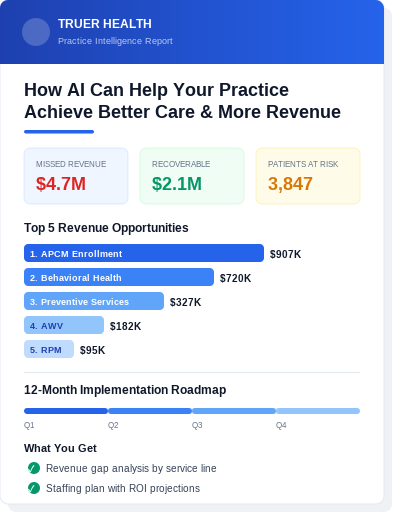
Two AI assistants and a policy engine. Their first pass in our own practice found $482,000 payable that no billing report showed.
Choose where to start
Better care and a healthier practice are the same work, once it actually gets done. Pick the aim that matters most to you, and we’ll build your first step around it.
Medicare pays monthly to manage patients with chronic conditions. Quality programs like MIPS and Medicare Advantage star ratings pay more as more of your patients reach their goals. The care gap assistant finds who is due; the billing assistant makes sure the work gets paid.
Start with better outcomes →In an ACO or value-based contract, the practice keeps a share of what it saves. Transitional care after a hospital stay is billable, and it helps prevent the readmissions that drive cost up. Prevention you deliver now is spending nobody has later.
Start with lower cost →In the flipped exam room, patients share their history and goals from home, so the visit is for decisions, not data entry. Visits run shorter and patients feel heard. A loyal, full panel is the steadiest revenue a practice has.
Start with patient experience →Care navigators deliver the care management Medicare pays for, so physicians aren’t doing it after hours. The assistants take on the overnight checking and list-building. Every resignation costs months of hiring and training; a calmer team stays.
Start with team well-being →Preventive care costs the patient nothing: the Medicare annual wellness visit has no cost-sharing, and most private plans and Medicaid expansion plans must cover recommended preventive services with no copay or deductible. For Qualified Medicare Beneficiaries (QMBs), Medicaid covers Medicare cost-sharing, so care management costs them nothing either. Community health integration and navigation codes pay care navigators to help with food, housing and transportation.
Start with health equity →In the middle of the wheel is our whole suite, working as one.
About five minutes. No account, no patient data. Not sure which aim? We’ll help you pick.
Adapted from the Quintuple Aim for health care improvement. Medicare examples; eligibility, documentation and payer rules apply.
Truer Health
Specialized in preventive and lifestyle medicine.
Checks every visit against the payer rules overnight, catches what was done but not billed, and shows who is due for what next, so you deliver more.
Meet the billing assistant →Closes care gaps in bulk.
Automates care coordination: finds every patient due, runs the outreach and follow-up, and tracks each gap until it closes. Your team handles only the exceptions.
Meet the care gap assistant →Define how your practice should flow.
Guidelines, quality measures, payer programs, or new policies like produce prescriptions in food deserts. Write them once; both assistants follow them for every patient.
For practices and health systems →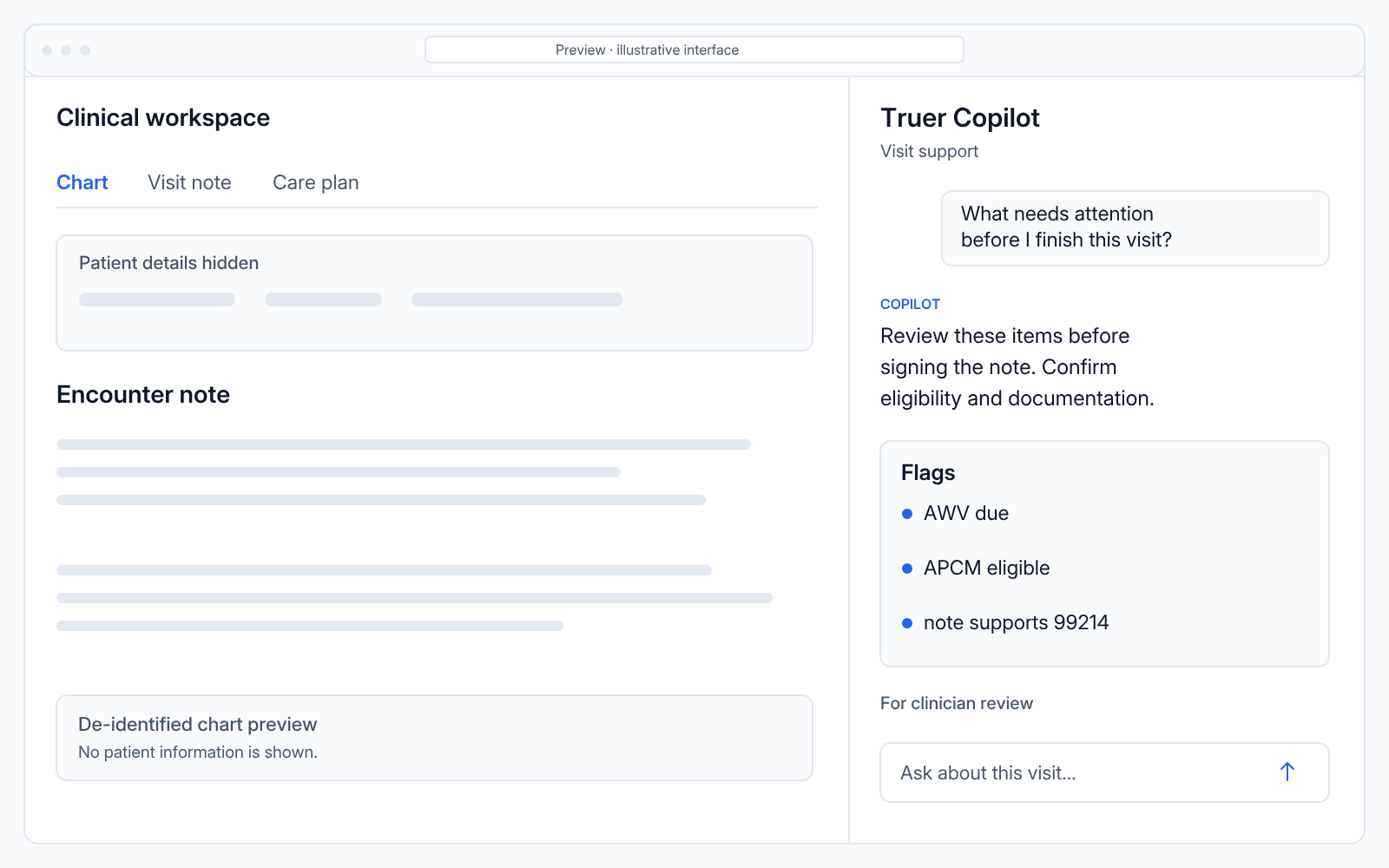 In the visit
The Clinician Copilot: flags, services due and a documentation check beside your EHR.
Clinician Copilot →
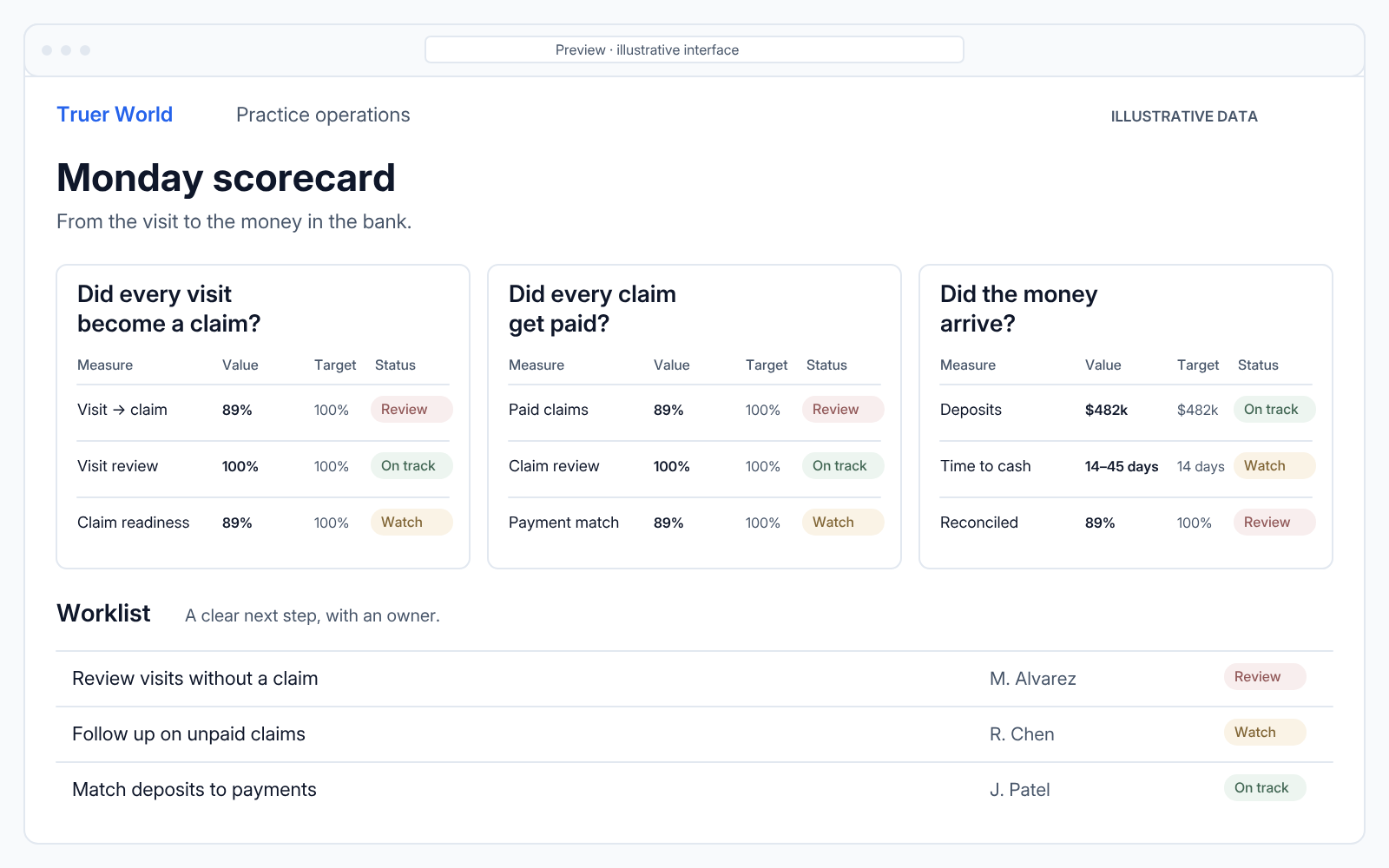 For the care team
The practice dashboard: worklists with owners and the same scorecard every Monday.
What each one unlocks →
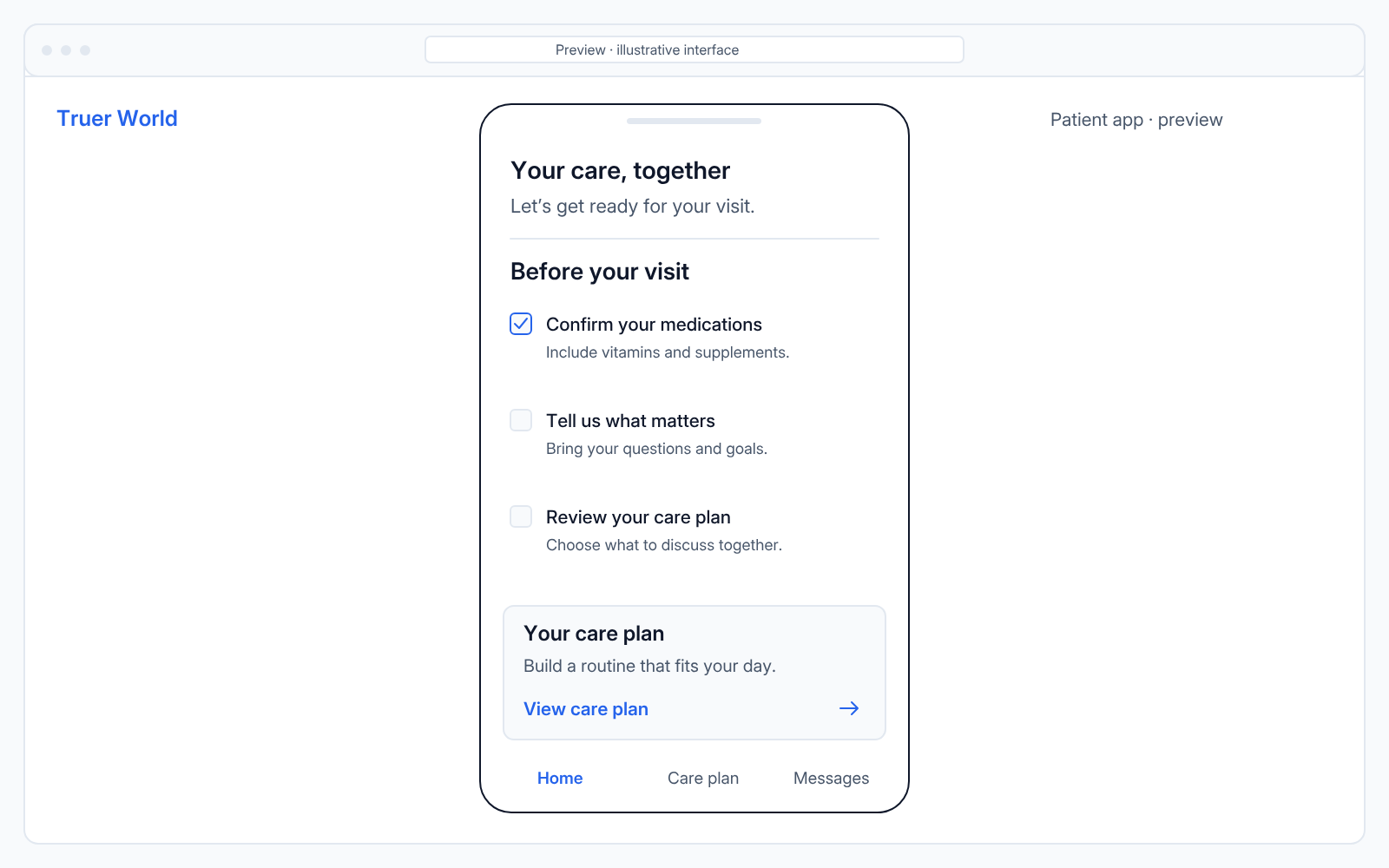 Before the visit
The patient app gathers history and questions at home, so the visit goes quickly.
For patients →
Pick what you want to hear about. We email when something opens, and rarely otherwise. Reply “stop” anytime.
Free · bring your own AI
A spreadsheet that interviews you. Open it in ChatGPT, Claude, Gemini, or a Sheets/Excel add-in; it asks one question at a time, gives you a Quick Win in fifteen minutes, and builds a 90-day test and a five-year plan. No patient data goes in. Nothing connects to us.